Music Fundamentals for Beginners: Essential Concepts to Get Started Quickly
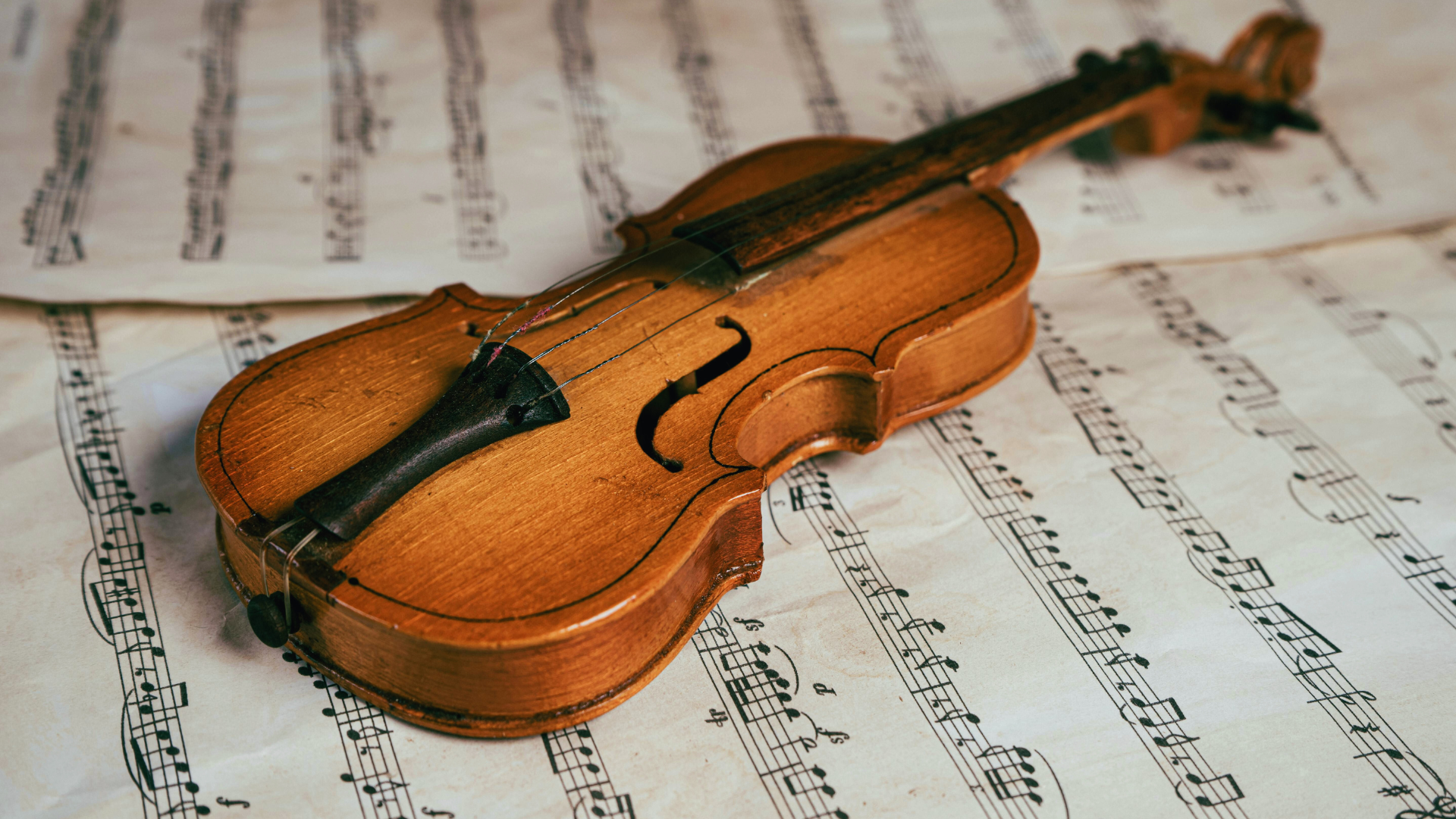
Music fundamentals form the foundation for understanding and creating music. They include core concepts like rhythm, melody, harmony, and notation, which are essential for beginners to grasp before advancing.
Knowing these basics helps you read sheet music, play instruments accurately, and communicate effectively with other musicians. Starting with a solid grasp of fundamentals makes learning more complex musical ideas easier and more efficient.
Understanding Musical Notes
Musical notes represent the pitch and duration of a sound. They form the foundation of written music and help performers interpret the composer’s intentions. Notes vary in shape and position to indicate different sounds and silences.
Types of Notes and Rests
Notes indicate sounds, while rests signify silence. The primary note types include whole, half, quarter, eighth, and sixteenth notes. Each has a distinct symbol and plays for a specific length of time.
- Whole note (𝅝): longest duration, typically 4 beats
- Half note (𝅗𝅥): 2 beats
- Quarter note (♩): 1 beat
- Eighth note (♪): half a beat
- Sixteenth note (𝅘𝅥𝅯): quarter of a beat
Rests correspond directly to notes but indicate silence for the equivalent duration. For example, a quarter rest means silence for one beat.
Note Values and Durations
Each note’s value determines its duration within a measure. The standard time signature dictates how beats are counted.
In 4/4 time, a whole note fills the entire measure with 4 beats. A half note takes up half the measure with 2 beats. Note values add or divide in halves, so an eighth note is half the length of a quarter note.
Understanding dot notation is important. A dot after a note increases its duration by half. For instance, a dotted half note lasts 3 beats (2 + 1).
Reading Musical Notation
Musical notation places notes on a staff to indicate pitch and timing. The staff has five lines and four spaces. Each line or space corresponds to a specific pitch, which varies based on the chosen clef.
Clefs like Treble and Bass assign names to lines and spaces, guiding which notes to play. Notes’ vertical position shows pitch, while their shape and flags show duration.
Time signatures at the beginning of the staff define the rhythm. Bar lines separate measures, helping to organize the music’s flow and timing.
Rhythm and Meter
Rhythm involves the pattern of sounds and silences in music, while meter organizes these rhythms into recurring groups. Both work together to create a structured flow that helps musicians stay synchronized, and listeners follow the music’s pace.
Time Signatures
Time signatures appear at the beginning of a musical piece and indicate how the beats are grouped. They consist of two numbers: the top number shows how many beats are in each measure, and the bottom number indicates the note value that counts as one beat.
Common time signatures are 4/4, meaning four quarter-note beats per measure, and 3/4, meaning three quarter-note beats per measure. Understanding these helps in recognizing the pulse and feel of the music, such as whether it’s march-like or waltz-like.
Counting Beats
Counting beats means assigning numbers to each beat in a measure to keep track of timing. In 4/4 time, the counting is “1, 2, 3, 4” repeatedly. This system helps maintain precision, especially when playing or practicing music with others.
Notes can be divided further, like counting eighth notes as “1 & 2 & 3 & 4 &”. Counting aloud or tapping the beat internally ensures you understand the rhythm and can reproduce it accurately.
Basic Rhythmic Patterns
Basic rhythmic patterns combine different note values, such as quarter notes, eighth notes, and rests, to create distinct grooves. For example, a simple rock beat might have steady quarter notes on the bass drum with eighth notes on the hi-hat.
Patterns can be shown as:
| Note Value | Duration |
| Whole note | 4 beats |
| Half note | 2 beats |
| Quarter note | 1 beat |
| Eighth note | 1/2 beat |
| Sixteenth note | 1/4 beat |
Mastering these patterns provides a foundation for more complex rhythms in music.
Pitch and Scales
Pitch refers to the highness or lowness of a sound, which is essential for identifying notes. Scales organize pitches into patterns that form the basis of melodies and harmonies.
Pitch Recognition
Pitch recognition is the ability to identify and differentiate musical notes by their sound frequency. Practicing pitch helps in tuning instruments, singing in tune, and understanding music theory.
Learning to recognize pitches often starts with training the ear to distinguish between notes played on a piano or other instruments. Using solfège (do, re, mi) or numeric systems (1, 2, 3) can aid in memorizing pitch relationships.
Absolute pitch is rare and refers to identifying notes without a reference. More common is relative pitch, where you compare notes to each other. Developing relative pitch strengthens listening skills and improves musical accuracy.
Major Scales
A major scale is a sequence of eight notes with a specific pattern of whole and half steps: whole, whole, half, whole, whole, whole, half. This pattern gives the major scale its bright and happy sound.
For example, the C major scale consists of the notes C, D, E, F, G, A, B, C. No sharps or flats appear in this scale, making it a common starting point for beginners.
Major scales form the foundation for many musical pieces. They help in building melodies, harmonies, and chords. Knowing the major scale’s structure also makes it easier to understand key signatures.
Minor Scales
Minor scales have a darker or sadder tone compared to major scales. There are three main types: natural, harmonic, and melodic minors, each with slight variations in step patterns.
The natural minor scale follows the pattern: whole, half, whole, whole, half, whole, whole. For instance, A natural minor includes A, B, C, D, E, F, G, A.
Harmonic minor raises the seventh note by a half step, creating a unique sound often used in classical and jazz music. The melodic minor raises the sixth and seventh notes when ascending, but follows the natural minor when descending.
Understanding these differences helps in interpreting music with varied emotional expressions and building chords related to minor keys.
Intervals and Melody
Intervals are the building blocks of melody, defining the distance between two notes. Understanding how intervals work helps in creating shapes and patterns that sound pleasing. Melodies emerge when these intervals connect smoothly over time.
Understanding Intervals
An interval measures the pitch difference between two notes. Intervals have names based on the number of scale steps they span, such as major third, perfect fifth, or minor second.
Common intervals include:
| Interval Name | Steps Apart | Sound Quality |
| Minor 2nd | 1 semitone | Dissonant, tense |
| Major 2nd | 2 semitones | Slightly dissonant |
| Perfect 4th | 5 semitones | Stable, consonant |
| Perfect 5th | 7 semitones | Strong, open |
| Octave | 12 semitones | Same note, higher or lower |
Intervals create emotional effects; smaller ones tend to sound closer and more connected, while larger intervals can feel more dramatic or open. Beginners often start by recognizing these sounds to build a sense of pitch distance.
Building Simple Melodies
A melody is a sequence of notes that listeners can easily follow and remember. Start by using small intervals like seconds and thirds to create stepwise motion, which is easier to sing or hum.
Simple melodies often rely on repetition and variation of short phrases. Using a limited range of notes within a key helps maintain coherence.
Try combining intervals like:
- Stepwise movement (major seconds)
- Small leaps (minor thirds)
- Occasional larger leaps (perfect fourths or fifths) for interest
Example:
- C → D → E → G → F → E → D → C
This simple pattern uses mostly small steps with a leap to keep the melody engaging but easy to follow. Being deliberate with interval choices can shape how the melody feels emotionally and rhythmically.
Chords and Harmony
Understanding how chords are built and how they move from one to another is essential for creating music that sounds pleasant and coherent. Harmony is created when different notes and chords interact, giving music depth and emotional impact.
Basic Chord Construction
Chords are groups of notes played together. The most basic chord is the triad, made of three notes: the root, third, and fifth. The root defines the chord’s name, the third determines if it is major (happy sound) or minor (sad sound), and the fifth adds stability.
For example, a C major chord contains the notes C (root), E (major third), and G (perfect fifth). By changing the third to E♭, it becomes a C minor chord. Adding extra notes, like the seventh or ninth, creates more complex chords that add color and tension.
Common Chord Progressions
Chord progressions are sequences of chords played in order. Some progressions are widely used because they create a natural sense of movement and resolution.
A classic example is the I-IV-V progression. In the key of C major, this is C (I), F (IV), and G (V). This pattern is common in many genres and establishes a strong tonal foundation.
Another popular progression is ii-V-I, often found in jazz. It uses the chords D minor (ii), G major (V), and C major (I), creating a smooth and satisfying return to the home chord.
| Progression | Example in C Major | Description |
| I-IV-V | C – F – G | Strong, simple, widely used |
| ii-V-I | Dm – G – C | Jazz standard, smooth resolution |
Learning these progressions helps beginners play and compose music with a clear sense of direction.
Musical Dynamics and Expression
Understanding how to vary volume and note emphasis is key to bringing music to life. These elements shape the mood, texture, and energy in a piece.
Dynamic Markings
Dynamic markings indicate the volume level at which notes or passages should be played. Common symbols include p (piano) for soft and f (forte) for loud. These marks guide performers to adjust intensity smoothly or suddenly.
Other variations like mf (mezzo-forte) and pp (pianissimo) provide nuance between loud and soft. Symbols such as & (crescendo) and > (decrescendo) tell musicians to gradually increase or decrease volume, respectively.
These markings are essential for interpreting music as intended. Ignoring them can make a performance sound flat or emotionless. Recognizing and practicing these signs helps build control over sound production.
Articulation
Articulation defines how particular notes are played or sung, affecting their attack, duration, and release. Common articulations include staccato (short, detached notes) marked by dots above or below notes, and legato (smooth, connected notes), often indicated by slurs.
Other articulations are accent (emphasizing a note) and tenuto (holding a note for its full value). These help convey phrasing and emotional intent.
Proper articulation makes melodies clearer and more expressive. Learning to interpret and apply these markings improves a musician’s technical and expressive capabilities significantly.
Essential Music Theory Concepts
Understanding how notes relate to each other and how pieces are organized is fundamental. Concepts like tonal centers and the relationships between pitches create a structure that guides melody and harmony.
Key Signatures
Key signatures define the set of sharps or flats that apply throughout a piece, indicating its tonal center. They tell you which notes to play consistently altered, simplifying the reading of music by avoiding repeated accidentals.
For example, a key signature with two sharps (F# and C#) indicates the key of D major or B minor. Each key signature corresponds to a specific scale pattern. Learning the order of sharps and flats helps identify keys quickly:
- Order of Sharps: F#, C#, G#, D#, A#, E#, B#
- Order of Flats: Bb, Eb, Ab, Db, Gb, Cb, Fb
Memorizing these orders makes it easier to understand which notes are affected in different keys, improving sight-reading and composition skills.
Circle of Fifths
The Circle of Fifths is a visual tool that arranges all 12 keys in a circular pattern based on fifths intervals. Moving clockwise adds sharps; moving counterclockwise adds flats.
It helps to quickly determine related keys and key signatures. For instance, C major has no sharps or flats, G major (one step clockwise) has one sharp, and F major (one step counterclockwise) has one flat.
The circle also aids in understanding chord progressions and modulation between keys. Keys adjacent on the circle share many common notes, making transitions smoother in composition and improvisation.
Practical Ear Training
Ear training helps develop the ability to recognize pitches, intervals, chords, and rhythms by ear. This skill is essential for musicians to improve their listening and playing accuracy.
Start by practicing interval recognition. Listen to two notes played one after the other and try to identify the distance between them. Common intervals include minor second, major third, and perfect fifth.
Use this simple exercise to train intervals:
| Interval | Description | Example |
| Minor second | One half-step | C to C# |
| Major third | Four half-steps | C to E |
| Perfect fifth | Seven half-steps | C to G |
Next, practice chord identification. Listen to chord types such as major, minor, and diminished. Focus on the emotional sound each chord produces and how they differ.
Rhythm training is equally important. Clap back or tap simple rhythmic patterns to internalize timing and beat. Start slow and increase speed as confidence grows.
Using apps and online tools designed for ear training can provide structured practice and instant feedback. Consistent daily practice, even for 10-15 minutes, leads to steady improvement in ear skills.
Developing Good Practice Habits
Consistent practice builds skill over time. Set specific goals for each session to stay focused and measure progress. Avoid aimless playing by choosing clear tasks like scales, rhythms, or songs.
Create a schedule that fits your daily routine. Short, frequent sessions are often more effective than long, irregular ones. Even 15-20 minutes a day can lead to steady improvement.
Tips for Effective Practice:
| Tip | Explanation |
| Warm up | Start with simple exercises to prepare fingers and mind. |
| Use a metronome | Helps maintain a steady tempo and timing. |
| Break it down | Focus on challenging parts before playing the whole piece. |
| Record yourself | Listen critically to identify areas for improvement. |
Staying patient is important. Progress may feel slow at times, but persistence leads to better results. Avoid rushing through material just to cover more.
Mix repetition with variety. Repeating exercises builds muscle memory, but switching tasks keeps practice engaging and improves different skills.


0 Comments