How to Read Sheet Music Effectively for Beginners and Beyond

Reading sheet music means understanding the symbols that represent musical sounds, rhythms, and dynamics. The key to reading sheet music is learning how notes correspond to specific pitches and timing on the staff.
Notes are placed on five lines and four spaces, each indicating a different pitch. Along with note shapes and symbols, the timing of each note is shown by its appearance, allowing you to interpret how long to play each sound.
By grasping these basics, you unlock the language composers use to communicate their music clearly. This article breaks down how to read sheet music in simple steps, making the process manageable and practical.
Understanding Sheet Music Basics
Sheet music is a written representation of music using symbols and notation. It provides essential information about pitch, rhythm, dynamics, and articulation that musicians use to perform a piece accurately.
What Is Sheet Music
Sheet music is a visual guide that shows how a piece of music should be played or sung. It uses a staff, which is made up of five lines and four spaces, where notes are placed. Each note’s position on the staff corresponds to a specific pitch.
Additional markings like key signatures, time signatures, and tempo indications give context to the music’s structure. Dynamics such as forte (loud) or piano (soft) instruct on volume. Articulations like staccato or legato clarify how notes connect or separate.
Sheet music serves as a set of instructions to interpret and perform music consistently across different musicians.
Types of Sheet Music
There are several types of sheet music, each suited for different instruments or purposes.
- Lead Sheets: Contain melody, lyrics, and chord symbols, mainly used in jazz and pop.
- Piano Scores: Show both treble and bass clefs, covering melody and accompaniment.
- Full Scores: Include parts for every instrument in an ensemble, used by conductors.
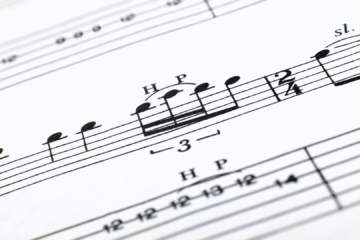
- Tablature (Tabs): Common in guitar music; shows finger placement rather than notes on a staff.
Choosing the right type depends on your instrument and the music style. Some types emphasize melody, while others focus on harmony or rhythm.
Standard Notation Symbols
Standard notation uses a set of symbols to communicate musical elements clearly.
| Symbol | Meaning |
| Clefs | Indicate note names on staff (e.g., Treble, Bass) |
| Notes | Represent pitch and duration |
| Rests | Indicate silence for specific durations |
| Time Signature | Shows beats per measure and note value of each beat |
| Key Signature | Indicates the scale (sharps or flats) used throughout the piece |
| Dynamics | Symbols for volume changes (e.g., p, f, mf) |
| Articulations | Instructions for how to attack notes |
Understanding these symbols is critical for reading sheet music accurately. Each symbol has a precise role that affects the interpretation of the music.
The Musical Staff and Clefs
Reading sheet music starts with understanding the staff and clefs. These elements define the pitch of notes and organize the visual layout of music.
Structure of the Staff
The staff consists of five horizontal lines and four spaces. Each line or space represents a different musical pitch.
Notes placed higher on the staff indicate higher sounds. Conversely, notes lower on the staff represent lower sounds.
Ledger lines extend the staff for notes outside its range. They appear as short lines above or below the main staff.
The staff provides a framework for musical notation, allowing a standardized way to read pitches.
Treble and Bass Clefs
The treble clef, or G clef, loops around the second line from the bottom. This line represents the G note above middle C.
The bass clef, or F clef, places two dots around the fourth line from the bottom. This line corresponds to the F note below middle C.
The treble clef is common for higher-pitched instruments like the violin, flute, and the right hand on the piano. The bass clef is used for lower instruments like the cello, bassoon, and the left hand on the piano.
Clefs define the pitch names assigned to each line and space on the staff, crucial for reading and playing notes correctly.
Other Common Clefs
Alto and tenor clefs, both C clefs, position the middle C on different lines. Alto clef centers middle C on the third line; tenor clef centers it on the fourth line.
These clefs are less common but important for instruments such as the viola (alto clef) and some trombone or cello parts (tenor clef).
The choice of clef minimizes excessive ledger lines and makes reading music more efficient.
Understanding these clefs allows musicians to read a wider range of notes across multiple instruments easily.
Notes and Pitches
Understanding where notes are placed and how they relate to sound is essential. This involves recognizing notes on the staff, grasping how long each note lasts, and reading notes that extend beyond the usual lines.
Identifying Notes on the Staff
The staff consists of five lines and four spaces. Each line and space corresponds to a specific note. In the treble clef, the bottom line is E, the next space up is F, and this pattern continues upward.
Notes are read from bottom to top. The sequence of notes moves stepwise: A, B, C, D, E, F, G, then repeats. Mnemonics help remember lines (“Every Good Boy Does Fine”) and spaces (“FACE”).
Clefs determine which pitches correspond to the staff lines and spaces. The bass clef assigns different notes than the treble clef, reflecting lower pitches.
Note Values and Counting Rhythm
Notes have different shapes indicating duration. Whole notes last four beats, half notes two beats, quarter notes one beat, and eighth notes half a beat.
Dots add half the value of a note, extending its length. For example, a dotted half note equals three beats.
Counting rhythm involves subdividing beats. For instance, four quarter notes in 4/4 time each take one beat, filling a measure. Understanding beat patterns supports accurate timing during performance.
Ledger Lines
Ledger lines extend the staff for notes too high or too low to fit. These lines appear above or below the five main lines.
Each ledger line adds one step in pitch. For example, middle C sits on a ledger line below the treble staff.
Reading ledger lines requires practice as the notes move beyond the standard staff, but they follow the same alphabetic sequence. They are crucial for accessing a full range of pitches on sheet music.
Reading Rhythms and Time Signatures
Understanding how rhythms and time signatures work is essential to accurately interpreting music. This involves knowing how beats are organized and how different note values represent time. Recognizing rests and their timing completes the grasp of musical rhythm.
Understanding Time Signatures
Time signatures appear at the beginning of a piece and indicate how many beats are in each measure and what note value gets one beat. The top number tells how many beats per measure, while the bottom number specifies which note represents one beat.
Common time signatures include 4/4, meaning four quarter-note beats per measure, and 3/4, meaning three quarter-note beats. Less common time signatures, like 6/8, have six beats per measure with the eighth note as the beat unit.
Time signatures shape the feel of the music and help performers keep consistent timing through each measure.
Reading Rhythmic Notation
Rhythmic notation uses different note shapes to indicate duration. Whole notes last four beats, half notes two beats, quarter notes one beat, eighth notes half a beat, and sixteenth notes a quarter beat in common time.
Flags and beams connect shorter notes, signaling their subdivision. For example, two eighth notes connected by a beam equal one quarter note in total duration.
Dots extend a note’s value by half of its original length, adding syncopation or complexity to rhythms.
Rests and Their Values
Rests symbolize silence for a specific duration. Like notes, rests have distinct shapes and values matching note lengths.
- Whole rest: silence for four beats
- Half rest: silence for two beats
- Quarter rest: silence for one beat
- Eighth and sixteenth rests: shorter silences matching their note counterparts
Rests affect the timing and flow of a piece by creating breaks that must be counted precisely. Ignoring rests can disrupt the rhythm and timing of the music.
Key Signatures and Scales
Key signatures indicate which notes are consistently sharp or flat throughout a piece. They provide a framework for the scale that defines the tonal center. Understanding how key signatures operate is essential to sight-reading and interpreting sheet music correctly.
How to Read Key Signatures
Key signatures appear at the beginning of each staff, right after the clef symbol. They consist of sharps (#) or flats (b) placed on specific lines or spaces. The number and position of these symbols tell you which notes are altered for the entire piece or section.
For sharps, the key signature follows a set order: F#, C#, G#, D#, A#, E#, B#. For flats, the order is reversed: Bb, Eb, Ab, Db, Gb, Cb, Fb.
For example, a key signature with two sharps (F# and C#) indicates the piece is most likely in D major or B minor.
Understanding Accidentals
Accidentals are symbols—sharp, flat, or natural—that alter the pitch of a note temporarily within a measure. They override the key signature but only apply to the specific note and octave where they appear.
A sharp (#) raises a note by a half step. A flat (b) lowers it by a half step. A natural (♮) cancels any previous sharp or flat. Accidentals reset at the start of the next measure unless tied over.
Accidentals allow composers to introduce notes outside the established key, creating tension or variation in melody and harmony.
Articulations and Dynamics
Understanding how notes are played involves recognizing marks that indicate the manner and intensity of each sound. These marks guide musicians on how to shape notes for expression and volume.
Common Articulation Marks
Articulations show how individual notes should be performed. A staccato (dot above or below a note) means play the note short and detached. A legato is often shown with a slur (curved line), instructing the player to connect notes smoothly.
Other key marks include the accent (>), which adds emphasis or a stronger attack. The tenuto (– above or below) means hold the note for its full value, often slightly stressed. Articulations can combine, so a note might be both accented and staccato for a sharp, detached emphasis. Recognizing these marks helps interpret the intended style and character of the music.
Reading Dynamic Markings
Dynamic markings indicate volume levels. The most common are piano (p) for soft and forte (f) for loud. These can be modified by prefixes such as mezzo (m), meaning moderately, as in mezzo-forte (mf).
Other important dynamics include crescendo (cresc.), signaling a gradual increase in loudness, and decrescendo (decresc.) or diminuendo (dim.), which means gradually getting softer. Marks like fortissimo (ff) or pianissimo (pp) indicate very loud or very soft volumes. Paying close attention to dynamic changes in how the music feels and conveys emotion with precision.
Tempo and Expression Marks
Tempo indicates the speed at which music is played. Expression marks provide clues about the mood, dynamics, and articulation. Together, they guide how a piece should feel beyond just the notes.
How to Interpret Tempo
Tempo is usually indicated at the beginning of a piece, often above the staff. It can be written as a word (Italian terms like Allegro or Adagio) or as a metronome marking (e.g., ♩=120).
Common tempo terms:
- Largo (very slow)
- Andante (walking pace)
- Presto (very fast)
Metronome markings tell exactly how many beats per minute (BPM) should be played, giving a precise speed. When tempo changes occur, look for words like ritardando (gradually slower) or accelerando (gradually faster). These indicate gradual tempo shifts that affect the piece’s flow.
Musical Expression Terms
Expression marks modify how the music sounds emotionally and dynamically. Common terms include dynamics like piano (soft) and forte (loud).
Other important expression words are:
| Term | Meaning |
| Crescendo | Gradually getting louder |
| Diminuendo | Gradually getting softer |
| Staccato | Play notes short and detached |
| Legato | Play notes smoothly connected |
These marks affect phrasing and feeling and are essential for conveying the composer’s intent. They are often written in Italian and must be interpreted in combination with tempo for accurate performance.
Putting It All Together: Practice Techniques
Effective practice bridges the gap between theory and performance. Focusing on small sections gradually improves speed and accuracy in reading music. Developing specific strategies enhances the ability to read and play unfamiliar pieces smoothly.
Step-by-Step Reading Exercise
Begin with a simple piece to avoid feeling overwhelmed. Break the music into short measures or phrases. Look at the key signature, time signature, and tempo before playing.
Play slowly at first, focusing on note names and rhythms. Use a metronome to keep steady time. If possible, hum or sing the notes silently before playing to internalize their sound.
Gradually increase speed as accuracy improves. Revisit difficult measures multiple times instead of rushing through the entire piece. Consistent repetition builds muscle memory and reading fluency.
Sight Reading Strategies
Prepare by scanning the piece for challenging sections like accidentals, rests, or unusual rhythms. Predict fingerings or positions in advance to reduce hesitation.
Limit reading ahead to small groups of notes or one or two measures. This reduces cognitive overload and improves real-time processing.
Maintain a steady tempo even if mistakes occur; stopping often disrupts flow. Pause briefly only to correct major errors.
Practice sight reading daily with new material to increase familiarity. Use graded exercises to build up to more complex pieces systematically.
Advancing Your Sheet Music Reading Skills
Improving at reading sheet music requires developing speed, timing, and consistent practice. Focused techniques and targeted resources can help you build these skills efficiently.
Tips for Faster Note Recognition
Speed up note recognition by practicing sight-reading regularly with simple pieces. Use flashcards that show notes on the staff paired with their names or keyboard positions.
Familiarize yourself with note patterns and common intervals instead of reading each note individually. This chunking method reduces processing time and enhances fluid reading.
Visual drills, such as pointing to notes on the staff and naming them quickly, build muscle memory. Set a timer and challenge yourself to improve without sacrificing accuracy.
Improving Rhythm Accuracy
Clap or tap rhythms before playing notes to internalize timing. Counting out loud using subdivisions (e.g., “1 e & a”) helps maintain a steady tempo.
Use a metronome to practice different note values and rests. Start slow, then gradually increase speed once consistent timing is achieved.
Focus on difficult rhythmic patterns by isolating measures and repeating them until they can be performed without hesitation.
Resources for Practice
Apps like Tenuto and Rhythm Trainer offer interactive exercises on note reading and rhythm recognition. These tools provide immediate feedback that reinforces learning.
Sheet music collections with graded difficulty levels allow gradual skill building. Choose pieces designed for sight-reading improvement.
Join online forums or local music groups to exchange practice tips and access recommended materials. Consistent practice coupled with diverse materials enhances reading proficiency.
Common Challenges and How to Overcome Them
One common challenge when learning to read sheet music is recognizing notes quickly. Many beginners struggle to identify notes on the staff without hesitation. To improve, practice regularly with flashcards or apps designed for note recognition.
Rhythmic patterns can also be difficult. Counting out loud while clapping or tapping can help internalize complex rhythms. Breaking down rhythms into smaller sections makes them easier to manage.
Another issue is understanding key signatures and accidentals. Memorizing key signatures and their related scales helps clarify which notes are sharp or flat throughout the piece. Writing accidentals directly on the music during practice can reduce confusion.
Sight-reading can feel overwhelming initially. Start with simple pieces and gradually increase difficulty. Repetition and consistent practice build confidence.
| Challenge | Tip to Overcome |
| Slow note recognition | Use flashcards, note recognition apps |
| Complex rhythms | Clap, tap, and count rhythms aloud |
| Key signatures | Memorize keys and mark accidentals |
| Sight-reading overload | Begin with simple scores, practice often |
Consistency in practice is essential. Even short, daily sessions improve overall reading fluency. Focusing on one challenge at a time prevents frustration.

0 Comments