Why Every Artist Should Study Music Theory: Unlocking Creativity and Mastery in Music

Every artist can benefit from a solid foundation in music theory. Studying music theory enhances creativity and allows artists to communicate their ideas more effectively. Understanding the structure behind music opens up new avenues for composition and improvisation, enabling artists to break free from traditional constraints.
Music theory acts as a toolbox for artists, providing them with the knowledge to analyze and interpret the works of others. This comprehension fosters a deeper appreciation for different genres and styles, ultimately enriching their creative process. By grasping the fundamentals, artists can experiment with confidence and innovate in ways that might have previously seemed daunting.
Additionally, a strong grasp of music theory can significantly improve collaboration with other musicians. Artists who understand musical terminology and composition are better equipped to convey their ideas during group projects, leading to more cohesive and productive partnerships. This skill set not only elevates individual artistry but also contributes to the success of collaborative efforts.
Foundations of Music Theory
Music theory provides essential tools for understanding the structure and language of music. By exploring notation, scales, and chords, artists can deepen their musical knowledge and improve their creative expression.
Notation and Reading Music
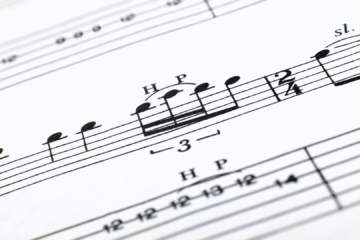
Notation is the written representation of music. It includes staff lines, notes, rests, and various symbols that indicate how music is to be played.
Key elements include:
- Staff: Five lines and four spaces that represent different pitches.
- Notes: Symbols placed on the staff indicate specific pitches. For example, a whole note lasts four beats, while a quarter note lasts one beat.
- Rests: Symbols indicating silence for a specific duration.
Learning to read music allows artists to interpret compositions accurately, communicate with other musicians, and create their own written music.
Scales and Key Signatures
Scales form the foundation of melodies and harmonies. A scale is a sequence of notes in a specific order. The two most common types are major and minor scales.
Key signature identifies the key of the music:
- Major scales often sound happy or bright.
- Minor scales convey a more sombre or emotional tone.
Each key signature indicates which notes are sharp or flat, providing a framework for improvisation and composition. Understanding scales helps artists develop their melodic and harmonic vocabulary.
Chords and Harmony
Chords are groups of notes played simultaneously, forming the harmony of music. The most basic chord is the triad, consisting of three notes.
Types of chords include:
- Major Chords: Have a happy sound.
- Minor Chords: Result in a more melancholic feel.
- Diminished and Augmented Chords: Provide tension and complexity to music.
Harmony is built on the relationship between chords and can enhance emotional expression in music. By studying chords, artists learn to create progressions that evoke specific moods and feelings.
The Creative Benefits of Music Theory
Studying music theory offers numerous creative advantages that empower artists to explore their craft more deeply. It provides essential tools that lead to improved creativity, enhance collaboration, and allow for better expression of musical ideas.
Enhanced Musical Creativity
Knowledge of music theory encourages artists to experiment with new concepts. Understanding scales, chords, and harmony opens avenues for crafting unique melodies and harmonies.
For instance, familiarity with modes can inspire songwriters to move beyond the basic major and minor scales. This exploration fosters innovation, leading to distinctive sounds that set an artist apart.
Musical concepts such as counterpoint can introduce complexity to compositions. Artists can weave multiple melodies together, enriching their work. When artists grasp how different elements interact, they become more adept at bending traditional structures, leading to truly original pieces.
Improved Collaboration with Other Musicians
With a solid foundation in music theory, artists can communicate more effectively with peers. Understanding terms like “time signature,” “dynamics,” and “tempo” enables clearer discussions during rehearsals or songwriting sessions.
This common language facilitates smoother collaborations. Musicians can convey ideas and feedback without misunderstanding, making the creative process more efficient.
Additionally, artists can engage more deeply in jam sessions or group performances. Being able to follow and contribute to complex arrangements enhances group dynamics, allowing for spontaneous creativity that can yield surprising and rewarding results.
Effective Communication of Musical Ideas
Music theory provides tools to articulate complex musical concepts. Instead of relying on vague descriptions, artists can use precise terminology to express their visions.
For example, if a musician wants a piece to evoke a particular mood, mentioning specific scales or chord progressions can effectively convey the intended emotion. This clarity reduces ambiguity and aligns everyone’s expectations.
Moreover, artists can transfer their ideas to sheet music or digital formats easily. This capability ensures that their musical vision is accurately shared, making it easier for others to interpret and perform their work.
Practical Applications in Composition and Performance
A strong understanding of music theory enhances creativity and proficiency. It provides artists with tools for both composition and live performance that can enrich their musical expression.
Songwriting and Arrangement
Studying music theory equips artists with essential skills for songwriting and arrangement. It offers knowledge of chord progressions, melodies, and harmonies, which facilitates the crafting of compelling songs.
Understanding song structures, such as verse-chorus forms, helps maintain listener engagement. Artists can seamlessly experiment with dynamics, transitions, and key changes.
By recognizing how certain chords evoke specific emotions, an artist can effectively convey feelings through their music. This nuanced approach can elevate a simple melody into a powerful composition.
Improvisation and Soloing
Music theory serves as a foundation for improvisation and soloing. An artist familiar with scales and modes can create spontaneous melodies that fit the chord progressions of a piece.
Knowing the relationship between chords and scales allows for more informed choices during improvisation. Artists can confidently navigate through complex harmonic structures while soloing.
Additionally, grasping rhythmic theory contributes to more dynamic improvisation. Various rhythmic patterns can be employed to create excitement, complexity, or subtlety in performance.
Interpreting Music Expressively
An understanding of music theory enhances the ability to interpret and perform music expressively. Familiarity with elements such as dynamics, articulation, and phrasing allows artists to infuse their style into their performances.
Recognizing formal structures and harmonic functions provides insight into a piece’s emotional depth. An artist can emphasize significant moments in music, making their performance more impactful.
Theory knowledge also aids in analyzing scores for interpretative decisions. Artists can make informed choices about tempo, rubato, or emphasis, leading to a more nuanced performance.

0 Comments