Beginner Guide to Music Theory Explained for New Musicians
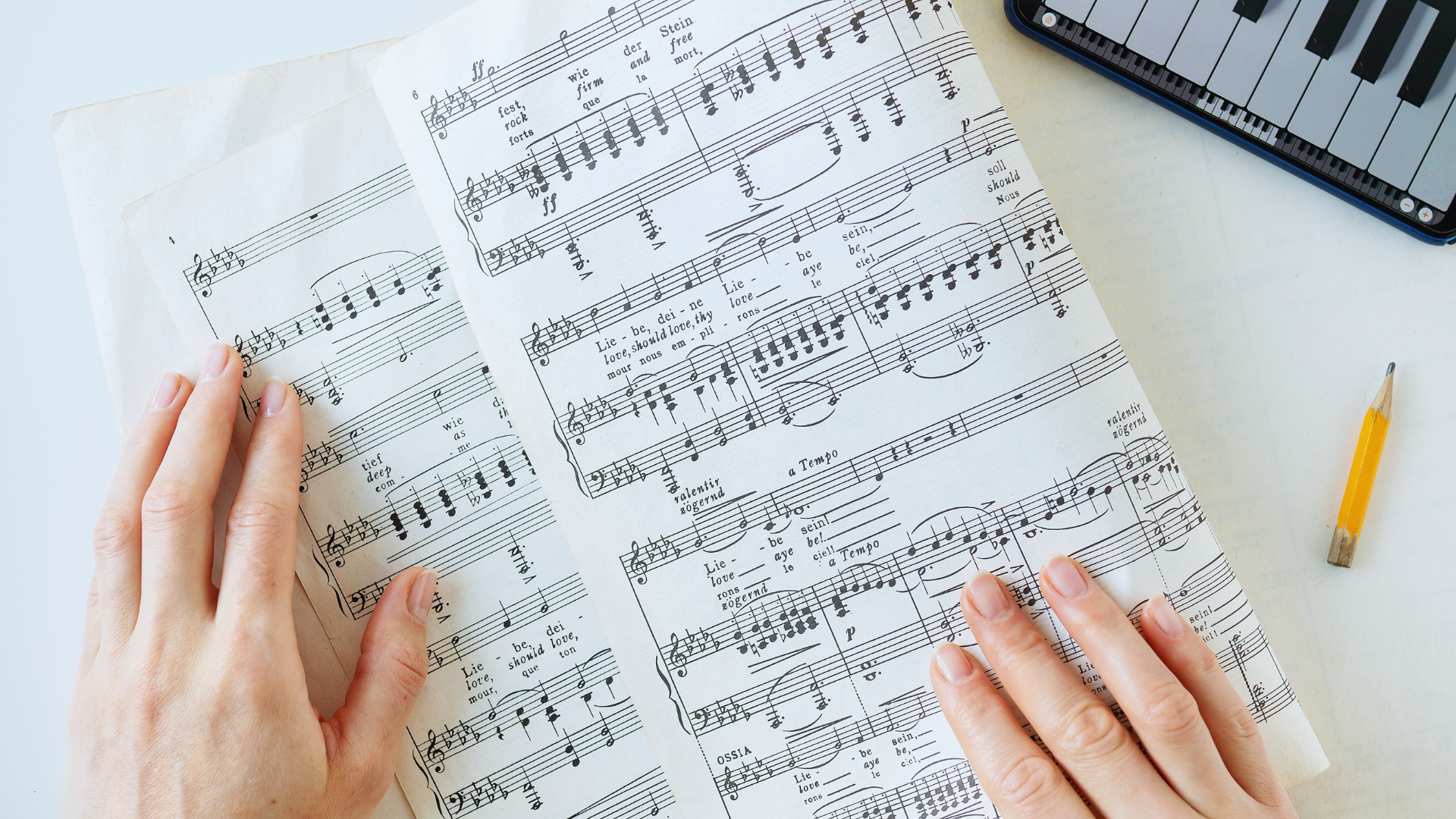
Music theory is the study of how music works. It explains the building blocks of sound, such as notes, scales, chords, and rhythms, and shows how they fit together to create songs. Understanding these elements helps anyone read, write, and perform music with more confidence.
This guide breaks down the basics without unnecessary jargon, making it easy to follow whether you play an instrument or just want to improve your listening skills. Knowing simple concepts like key signatures and chord progressions opens up a clearer path to musical creativity.
By grasping the foundations of music theory, you will gain tools that make learning new music faster and more enjoyable. This knowledge forms the basis for exploring more complex ideas later on.
Foundations of Music Theory
Music theory involves understanding the basic elements that make up music and how they interact. This includes the system of notes, how sounds vary in pitch, and the structure that organizes music into recognizable forms.
What is Music Theory?
Music theory is the study of the language and practices used in music. It explains how notes combine to create melodies, harmonies, and rhythms. By learning theory, musicians can read, write, and understand music more effectively.
It covers scales, chords, intervals, rhythm, and notation. Theory helps identify patterns and predict how music is constructed, providing a framework to compose or analyze pieces. It applies universally, whether you’re dealing with classical compositions or modern songs.
Musical Alphabet and Notes
The musical alphabet consists of seven letters: A, B, C, D, E, F, and G. These letters cycle repeatedly across different pitches in the musical scale. Notes represent sound with specific pitch and duration, indicated by symbols on a staff.
Sharps (♯) and flats (♭) alter the pitch by a half step. For example, C♯ is a half step higher than C, and B♭ is a half step lower than B.
| Note | Symbol | Effect |
| A-G | Natural | Original note pitch |
| ♯ | Sharp | Raises pitch by a half step |
| ♭ | Flat | Lowers pitch by a half step |
Notes form the building blocks of melodies and harmonies.
Pitch and Frequency
Pitch refers to how high or low a sound is perceived. It is determined by the frequency of sound waves, measured in Hertz (Hz). Higher frequencies produce higher pitches.
For example, the note A above middle C typically vibrates at 440 Hz. Frequency doubles for each octave increase, so the A one octave higher is 880 Hz.
Understanding pitch helps in tuning instruments and identifying musical intervals. It is essential for distinguishing different notes and creating harmonies that are pleasing to the ear.
Rhythm and Meter
Rhythm organizes music in time, giving structure to melodies and harmonies. Meter divides music into recurring groups of beats, establishing a pattern that guides performers and listeners.
Understanding Beat and Tempo
The beat is the basic unit of time in music. It is what you tap your foot to when listening. Beats are steady and regular, creating a pulse that underlies the music.
Tempo refers to the speed of these beats, measured in beats per minute (BPM). A higher BPM means faster music, while a lower BPM means slower music. Tempo influences the mood and energy of a piece.
Performers use tempo markings, such as Allegro (fast) or Adagio (slow), to interpret the intended speed. Maintaining a consistent tempo helps keep musicians synchronized during performance.
Note Values and Rests
Note values determine the length of a sound. Common note durations include whole notes, half notes, quarter notes, eighth notes, and sixteenth notes.
| Note Value | Duration (relative) | Description |
| Whole note | 4 beats | Longest common note |
| Half note | 2 beats | Half of a whole note |
| Quarter note | 1 beat | Basic pulse unit |
| Eighth note | 1/2 beat | Shorter sound |
| Sixteenth note | 1/4 beat | Very short sound |
Rests represent silences and hold the same time values as notes. They are essential for creating rhythm by indicating where no sound is played.
Time Signatures
Time signatures define how beats are grouped in a measure. The top number shows how many beats are in each measure. The bottom number indicates which note value equals one beat.
For example, in 4/4 time, there are four beats per measure, and the quarter note gets one beat. This is the most common time signature.
Other common signatures include 3/4 (three beats per measure, quarter note gets the beat) and 6/8 (six beats per measure, eighth note gets the beat). Different time signatures create different rhythmic feels in music.
Scales and Key Signatures
Understanding how notes are organized helps in reading, writing, and playing music. This involves recognizing patterns within scales and the system that shows the scale used in a piece.
Major Scales
A major scale consists of seven distinct notes, plus the octave. It follows a specific pattern of whole and half steps: Whole, Whole, Half, Whole, Whole, Whole, Half.
For example, the C major scale (C, D, E, F, G, A, B, C) contains no sharps or flats. Major scales sound bright and happy due to this pattern.
Each key has its own major scale, which serves as the foundation for melodies and harmonies.
Minor Scales
Minor scales have a different pattern, generally sounding sadder or more serious than major scales. The natural minor scale follows this pattern: Whole, Half, Whole, Whole, Half, Whole, Whole.
For example, the A natural minor scale is A, B, C, D, E, F, G, A. There are also harmonic and melodic minor variations that alter one or two notes for different effects.
Minor scales are essential for emotional contrast in music.
Key Signatures Explained
A key signature is a collection of sharps or flats placed at the beginning of a staff. It indicates the key of the piece by defining which notes are consistently raised or lowered.
For instance, one sharp in the key signature usually means the piece is in G major or E minor. No sharps or flats means C major or A minor.
Key signatures simplify reading music by reducing the need for accidentals.
| Sharps Count | Key (Major) | Key (Minor) |
| 0 | C | A |
| 1 | G | E |
| 2 | D | B |
Scale Degrees
Scale degrees are the positions of notes within a scale, numbered 1 through 7. Each has a name:
- 1st: Tonic
- 2nd: Supertonic
- 3rd: Mediant
- 4th: Subdominant
- 5th: Dominant
- 6th: Submediant
- 7th: Leading tone
The tonic is the “home” note, while the dominant often creates tension that resolves back to the tonic. Understanding scale degrees aids in identifying chord functions and melody structure.
Building Chords and Harmony
Chords are constructed by stacking specific intervals, creating combinations of notes that form harmony. Understanding the building blocks of chords and how they relate to each other sets the foundation for creating harmonic progressions.
Intervals
Intervals are the distances between two notes. Each interval has a specific name and sound quality, such as minor, major, perfect, diminished, or augmented.
Common intervals are measured in half steps or semitones. For example, a major third is four half steps above the root note, and a perfect fifth is seven half steps.
Intervals define how consonant or dissonant a chord sounds. The most stable intervals are the perfect unison (0 half steps), perfect fourth (5 half steps), perfect fifth (7 half steps), and octave (12 half steps).
Triads and Seventh Chords
Triads are the simplest chords, made up of three notes: the root, third, and fifth. They can be major, minor, diminished, or augmented, depending on the intervals between these notes.
- Major triad: root + major third + perfect fifth
- Minor triad: root + minor third + perfect fifth
- Diminished triad: root + minor third + diminished fifth
- Augmented triad: root + major third + augmented fifth
Seventh chords add a fourth note, the seventh, to create richer harmonies. Common seventh chords include major seventh, minor seventh, and dominant seventh. These chords introduce tension and release, essential for more dynamic harmonic movement.
Chord Progressions
Chord progressions are sequences of chords played in a specific order. They create movement and emotional impact in music.
The most common progression uses chords built on the first (I), fourth (IV), and fifth (V) degrees of a scale. For example, in C major, the progression would be C (I) – F (IV) – G (V).
Progressions can also include the sixth (vi) and second (ii) chords for variety. The use of tension and resolution, especially between dominant (V) and tonic (I) chords, is central to Western music harmony.
Reading Sheet Music
Understanding the basic layout and symbols of sheet music is essential to interpreting musical pieces correctly. This involves recognizing the staff, clefs, and ledger lines, as well as the various notation symbols and indications for dynamics and articulation.
Staff, Clefs, and Ledger Lines
The staff consists of five horizontal lines and four spaces where notes are placed. Each line and space corresponds to a specific pitch.
Clefs define which notes correspond to the lines and spaces on the staff. The most common clefs are the treble clef, indicating higher pitches, and the bass clef, indicating lower pitches.
Ledger lines extend the staff for notes that fall above or below the standard range. These short lines allow the written music to cover a wider pitch range without changing the clef.
Musical Notation Symbols
Notes represent sound duration and pitch. Common note types include whole, half, quarter, eighth, and sixteenth notes, each with distinct shapes indicating length. Rests denote silence for equivalent durations.
Time signatures appear at the beginning of a piece, indicating the number of beats per measure and the beat’s note value. Key signatures tell which notes are consistently sharp or flat throughout the piece.
Additional symbols like dots extend note duration by half, and ties connect two notes of the same pitch to be played as one.
Dynamics and Articulation
Dynamics show the volume of music and range from pianissimo (very soft) to fortissimo (very loud). Symbols like p, mf, and f mark these changes clearly.
Articulation affects how notes are played. Common marks include staccato (short and detached), legato (smooth and connected), and accent (emphasized). These influence the character and expression of the music.
Understanding these dynamics and articulations is crucial for accurate and expressive performance.
Practical Applications for Beginners
Starting with music theory includes developing listening skills, creating basic melodies, and using scales and chords in practice. These actions build a foundation for understanding musical structure and improve overall musicianship.
Ear Training Basics
Ear training focuses on recognizing pitches, intervals, and rhythms by listening. Beginners should start with simple interval identification exercises, such as distinguishing between a major third and a perfect fifth.
Practice with apps or online tools that play intervals or short melodies. Repeat and compare the sounds to develop accuracy.
Rhythm recognition is equally important. Clap or tap along to simple rhythmic patterns, gradually increasing complexity. This helps internalize timing and improves sight-reading.
Consistent daily practice of these skills can significantly sharpen your musical ear, making it easier to learn songs and improvise.
Writing Simple Melodies
Begin by using a limited number of notes, typically from a major or minor scale. Keep your melody short—4 to 8 measures is a good starting point.
Focus on a clear rhythmic pattern and use repetition to create structure. For example, repeat a two-measure phrase with slight variations.
Experiment with stepwise motion (notes a step apart) before adding leaps. This makes melodies easier to sing and remember.
Write your melody over a simple chord progression, such as I-IV-V-I, to understand how melody interacts with harmony.
Practicing with Scales and Chords
Practicing scales daily improves finger coordination and familiarizes you with key signatures. Start with major and minor scales, played slowly and evenly.
Use a metronome to maintain a steady tempo. Try playing scales ascending and descending to build muscle memory.
Chord practice should include basic triads (major, minor, diminished). Switch between chords smoothly to develop transitions.
Combine scales and chords by playing scales over the corresponding chord progressions. This bridges theoretical knowledge with real musical application.
Common Mistakes and Tips
Many beginners struggle with specific music theory concepts and often develop inefficient learning routines. Recognizing and addressing these issues early helps build a stronger foundation.
Avoiding Typical Pitfalls
One common mistake is trying to memorize theory rules without applying them practically. Understanding how scales, chords, and intervals work through playing or writing helps solidify these concepts better than rote memorization.
Another frequent error is overlooking rhythm and timing while focusing solely on notes and harmony. Theory is incomplete without considering how rhythms affect music’s structure.
Many learners also confuse key signatures and accidentals. Keeping a clear mental map of the circle of fifths can prevent this confusion and improve reading skills.
Avoid skipping basic topics like intervals or modes. Gaps here create more confusion later, especially when analyzing complex pieces.
Developing Good Practice Habits
Consistent short practice sessions are more effective than infrequent long ones. Aim for daily 20-30 minute sessions focused on targeted theory exercises.
Use a practice journal to track progress and note challenging areas. This keeps learning organized and highlights growth over time.
Combine theory with instrument work. For example, after studying chord construction, play those chords on a piano or guitar to connect theory and sound.
Regularly test yourself using flashcards or apps for intervals, scales, and chord identification. Active recall boosts retention contrasted with passive review.
Finally, schedule time for listening exercises. Identify intervals, chord progressions, and rhythms in actual music to sharpen aural skills alongside theoretical knowledge.
Next Steps for Learning Music Theory
To continue progressing, focus on structured study materials and clear objectives. This approach helps turn basic knowledge into practical skills.
Recommended Resources
Use textbooks like The Complete Musician by Steven Laitz or Music Theory for Dummies for solid foundational learning. Apps like Tenuto and Complete Music Reading Trainer offer interactive exercises that reinforce concepts daily.
Listening to classical pieces while following their scores can deepen understanding of harmony and form. Websites such as musictheory.net provide free tutorials and tools for practice.
Joining online forums or local workshops connects you with other learners, helping clarify difficult topics through discussion.
Setting Learning Goals
Set specific targets such as mastering scales, chord construction, or reading sheet music. Break goals into manageable time frames—for example, focus on major scales this week, then minor chords next.
Track progress by regularly testing yourself with exercises or quizzes. Consistent practice, even 15 minutes daily, is key.
Define the purpose behind learning theory—whether for composing, performing, or teaching—as this guides what to prioritize and prevents unfocused studying.

0 Comments